
In the world of sports betting, the application of handicap evaluation models has become increasingly sophisticated, reflecting a blend of statistical analysis, historical performance review, and strategic risk management. Bettors who wish to optimize their outcomes often rely on these models to assess the relative strengths of competing teams, identify potential value bets, and adjust their wagers accordingly. At the heart of this approach is the understanding that not all matches are equal, and that a simplistic view of win-loss probability fails to capture the nuances that determine the true outcome potential.
Handicap evaluation models function by assigning an artificial advantage or disadvantage to one team, usually expressed in terms of goals, points, or runs, depending on the sport. This adjustment seeks to normalize the perceived gap in ability, creating a more balanced framework for betting. Bettors applying these models must first engage in detailed data collection, examining factors such as recent form, head-to-head statistics, player injuries, team lineup consistency, and even external influences like travel schedules or weather conditions. This comprehensive dataset forms the foundation upon which the handicap is calculated, ensuring that the adjustments are rooted in empirical evidence rather than conjecture.
Once the data has been compiled, bettors typically employ statistical techniques to quantify the expected impact of the handicap. Regression analysis, Monte Carlo simulations, and Poisson distribution models are among the most common tools used to translate raw performance metrics into actionable predictions. For instance, Poisson models are particularly effective in football or soccer betting, as they allow the bettor to estimate the probability of different scorelines based on team scoring averages and defensive records. Monte Carlo simulations, on the other hand, enable bettors to run thousands of hypothetical match outcomes, revealing the range of possible results and the likelihood of each scenario. These methods help to convert qualitative observations into a numerical framework that supports more objective betting decisions.
Another critical aspect of applying handicap evaluation models is the assessment of line movement and market odds. Bettors must understand that bookmakers adjust handicap lines to balance action on both sides of a wager, reflecting public sentiment and betting volume as much as team performance. A line that has shifted significantly since its opening can indicate where value exists or where the market has overreacted to recent events. Skilled bettors analyze these shifts alongside their own model projections to identify discrepancies between perceived and actual probabilities. By exploiting these inefficiencies, they can place wagers that offer positive expected value, rather than merely betting on the likely winner.
Risk management is an integral component of effective handicap application. Even the most sophisticated models cannot eliminate uncertainty, and outcomes are influenced by factors beyond statistical control, such as sudden player injuries or unexpected strategic adjustments. Bettors often use techniques such as fractional staking, diversified betting across multiple handicaps, or hedging to mitigate potential losses. These approaches allow for disciplined engagement with the betting process, ensuring that a single unfavorable outcome does not disproportionately affect overall profitability. By combining rigorous analysis with prudent risk management, bettors can create a sustainable strategy that leverages the predictive power of handicap evaluation models while controlling exposure to variance.
Adaptability is also essential in the application of these models. Sports are dynamic, and factors influencing match outcomes can evolve rapidly over a season. Bettors must continuously update their models with fresh data, recalibrating their calculations to account for new information. Machine learning techniques are increasingly employed for this purpose, as they can detect patterns and adjust predictive weights automatically based on the latest results. This capacity for continual learning ensures that the handicap evaluation remains relevant and accurate, allowing bettors to respond to changing conditions in real time.
The psychological dimension of betting cannot be ignored when discussing handicap evaluation. Cognitive biases such as overconfidence, recency effect, and anchoring can distort a bettor’s perception of risk and probability. Successful application of handicap models requires a disciplined mindset, where decisions are guided by model outputs rather than intuition or emotional response. This objectivity is particularly crucial when outcomes diverge from expectations; bettors must be willing to trust the statistical underpinnings of their models, recognizing that variance is a natural aspect of probabilistic systems. Over time, adherence to model-based reasoning tends to produce more consistent results than impulsive or anecdotal decision-making.
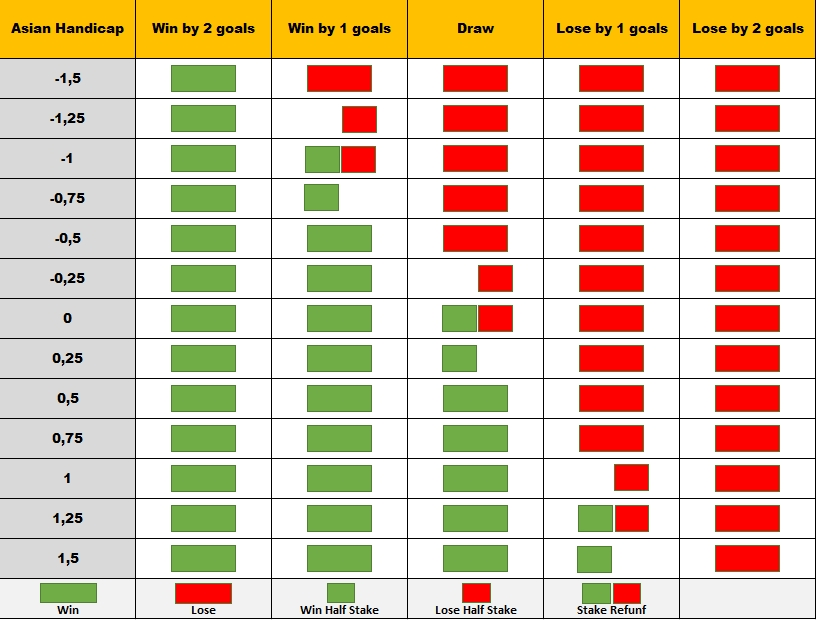
In practice, handicap evaluation models can be applied across a variety of betting formats, including Asian handicaps, point spreads, and total score lines. Each format requires a nuanced understanding of how the handicap interacts with team performance and market dynamics. For example, Asian handicaps eliminate the possibility of a draw, offering a more binary outcome that aligns neatly with probabilistic modeling. Point spreads in basketball or American football, meanwhile, necessitate precise calculations of scoring margins, highlighting the importance of both offensive and defensive efficiency. By tailoring the approach to the specific betting format, bettors can maximize the effectiveness of their evaluation models and improve the alignment between predicted probabilities and actual outcomes.
Ultimately, the application of handicap evaluation models is a sophisticated exercise in analytical rigor, strategic planning, and disciplined execution. Bettors who invest the time to collect accurate data, employ robust statistical techniques, monitor market dynamics, and maintain disciplined risk and psychological management are better positioned to identify value and make informed wagers. These models do not guarantee success in every instance, but they provide a structured framework that elevates betting from mere guesswork to an informed, evidence-based practice. Over time, consistent application of these principles can improve long-term profitability, allowing bettors to engage with sports betting as a calculated and strategic endeavor rather than a purely speculative activity.



Leave a Reply