
In the world of sports betting, understanding how markets react to line adjustments is crucial for anyone seeking to navigate wagering with an informed perspective. Betting lines, whether they reflect point spreads, totals, or moneylines, are not static—they respond dynamically to a range of influences, including team news, public perception, and sharp money. The adjustment of these lines is a signal of both market sentiment and underlying probability shifts, and interpreting them effectively can significantly influence betting strategies.
Line adjustments begin with the initial release from sportsbooks. These opening lines are typically derived from statistical models, historical performance data, and expert insights. They represent the sportsbook’s initial assessment of an event’s outcome probability. However, once a line is public, it enters the realm of the market. Bettors start placing wagers, and the distribution of bets can prompt the sportsbook to alter the line to balance its exposure. The core purpose of these adjustments is not necessarily to predict the outcome more accurately but to manage risk and ensure the sportsbook remains profitable regardless of the game’s result.
One of the key forces behind line movements is the flow of money from sharp bettors, who are professional or highly informed players. These bettors often have access to advanced analytics, injury reports, and situational statistics that the general public might overlook. When significant wagers from sharps hit a line, sportsbooks pay close attention and may adjust the odds to reflect this informed sentiment. A heavy bet on one side can trigger a shift in the point spread or moneyline as the sportsbook seeks to mitigate potential losses by encouraging wagers on the opposite side. Observing where and when these adjustments occur can provide regular bettors with insights into which outcomes the market collectively views as more likely.
Public perception is another powerful driver of line movement. Certain teams attract more casual attention due to brand recognition, recent success, or star players. This attention can lead to disproportionate betting activity on one side, causing sportsbooks to move the line even if the underlying probabilities have not changed significantly. For example, a team with a large fanbase may see lines move in their favor early in the week due to heavy public betting, despite statistical models suggesting a closer contest. Savvy bettors often look for situations where public sentiment has created a value discrepancy, capitalizing on line shifts that misrepresent the true probability of an outcome.
In addition to money flow, external factors such as injuries, weather, and tactical changes can influence line adjustments. An injury to a key player, particularly a quarterback in football or a star forward in basketball, can lead to immediate and often substantial line movement. Similarly, unexpected weather conditions, like heavy rain affecting a football game, can alter the expected scoring and lead to adjustments in total points or spreads. Market participants closely monitor these developments because the timing of line movements relative to these events can indicate the confidence level of sportsbooks in their initial lines. Early shifts often reflect sharp insight, while late moves can indicate public-driven adjustments.
The mechanics of line adjustments also involve nuanced psychological elements. Sportsbooks are aware of human biases and use line movement to influence betting behavior. Sometimes, they intentionally shade lines to attract action on one side and balance exposure, knowing that public bettors tend to overreact to certain narratives. This interplay between statistical probability and human psychology adds a layer of complexity for anyone analyzing line movements. Experienced bettors often study patterns in line movement over time, looking for systematic overreactions or underreactions that create profitable opportunities.
Technology has accelerated the speed and transparency of line adjustments. Real-time betting platforms update odds continuously as new information and wagers enter the market. This immediacy allows bettors to react quickly to changes, but it also means that lines can swing multiple times before a game begins. Understanding the timing of these movements is critical; early line shifts often reflect information asymmetry between sharps and public bettors, while late adjustments tend to mirror public consensus or late-breaking news. Skilled bettors monitor these temporal patterns, identifying moments when the market may temporarily misprice an outcome.
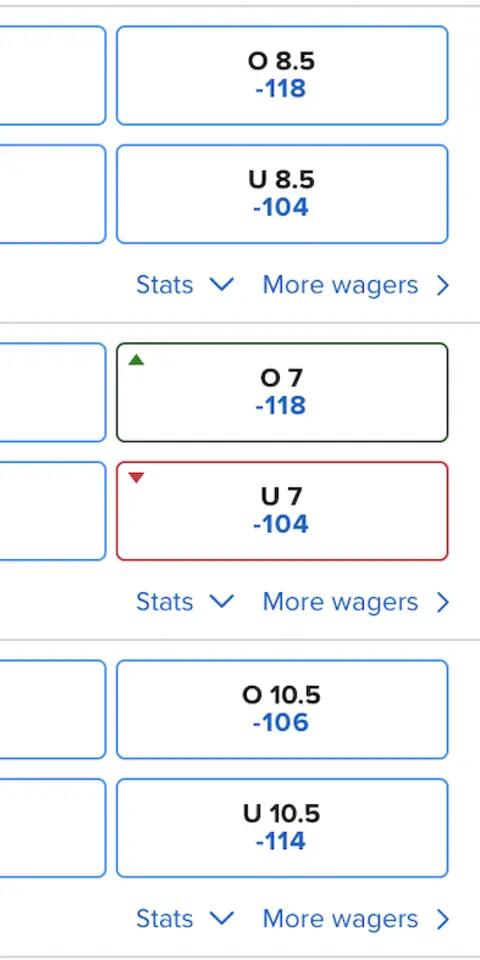
Another important aspect of line adjustments is their reflection of implied probability. Every betting line corresponds to a set of implied odds, which represent the market’s consensus on the likelihood of each possible outcome. When a line moves, the implied probability changes accordingly. For instance, a shift in a point spread from -3 to -4 indicates that the favored team is now perceived as more likely to win by a larger margin. Bettors who understand this relationship can translate line movements into actionable insights, evaluating whether the current odds offer value relative to their own assessment of probabilities.
It is also worth noting that not all line movements are created equal. Some shifts may be minor responses to individual bets, while others may represent the aggregation of significant market intelligence. Differentiating between these types requires a combination of experience, data analysis, and understanding the context surrounding each event. Observing historical line behavior, including how teams perform relative to spread adjustments, can provide valuable guidance for future betting decisions.
Finally, the broader implication of line adjustments is that sports betting markets are highly dynamic and interconnected systems. Each wager contributes to the evolving perception of probability, and each line movement communicates a wealth of information about risk, sentiment, and probability distribution. For the astute bettor, interpreting these signals effectively is as important as understanding team performance or individual statistics. Mastery of line movement analysis allows for strategic positioning, risk management, and, ultimately, more informed wagering decisions.
In conclusion, line adjustments are not arbitrary—they are a reflection of complex interactions between market behavior, information flow, and sportsbook risk management. By studying the causes and consequences of these movements, bettors gain a deeper understanding of both the event itself and the betting landscape surrounding it. Recognizing the influence of sharp money, public perception, external factors, and psychological tendencies can transform a simple observation of odds into a strategic tool. Those who approach betting markets with analytical rigor and awareness of line dynamics are better positioned to identify opportunities, mitigate risk, and navigate the intricate world of sports wagering with confidence.





Leave a Reply