
Betting markets are a dynamic reflection of collective opinion, data analysis, and shifting probabilities, and over time, these markets exhibit a natural tendency toward normalization. The concept of market normalization refers to the process by which odds and lines adjust in response to incoming information, bettor behavior, and statistical realities, eventually reflecting a balanced representation of actual outcomes. Understanding this process requires exploring the interplay of market forces, information dissemination, and human psychology, all of which converge to stabilize betting systems over the long term.
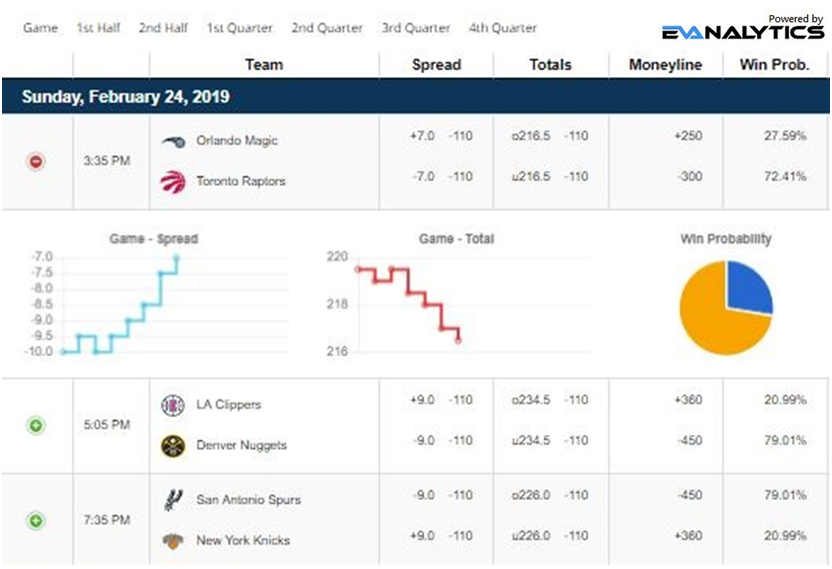
At the heart of market normalization is the mechanism of odds adjustment. Bookmakers initially set odds based on a combination of historical data, statistical models, and expert analysis. These opening lines are essentially a hypothesis about the likely outcome of an event, whether it is a sports match, a political election, or a financial market. However, the initial lines rarely capture the full complexity of probabilities, as they must anticipate public perception, betting patterns, and potential exposure. As bets are placed, bookmakers monitor the flow of money and adjust the odds accordingly to manage risk. If one side of a wager receives disproportionate attention, the odds shift to encourage balanced betting, reflecting the market’s ongoing effort to normalize the perceived probability of outcomes.
Normalization is further reinforced by the role of informed bettors, sometimes called “sharps” or “professional bettors,” whose wagers are based on extensive research and predictive models. These participants act as corrective agents in the market. When their insights contradict prevailing public opinion, they place bets that influence odds movement. Over time, the cumulative impact of such informed betting pushes the market toward equilibrium, as the odds come to reflect a more accurate probability of outcomes. The interaction between casual bettors and informed bettors creates a self-correcting system, where mispricings are gradually identified and corrected.
Market normalization also hinges on the flow of real-time information. In the modern era, news cycles, injury reports, team strategies, and weather conditions all contribute to rapid reassessment of probabilities. Betting markets are highly sensitive to such data, as any new insight can materially affect perceived value. When information is uneven or slow to disseminate, markets may temporarily deviate from an accurate reflection of reality. However, as news spreads and participants react, these discrepancies tend to correct themselves. This responsiveness is a crucial aspect of normalization, demonstrating how the continuous integration of data drives odds toward equilibrium.
Psychology plays a pivotal role in the normalization process. Human behavior, particularly cognitive biases such as overconfidence, herd mentality, and recency bias, can cause temporary distortions in betting markets. For instance, a high-profile team or individual may attract disproportionate attention regardless of statistical probability, resulting in skewed odds. Over time, however, collective experience, loss patterns, and market feedback recalibrate perception. Bettors learn to adjust their strategies, either by betting more conservatively or by identifying value in overlooked options. This iterative learning process ensures that the market eventually incorporates both rational analysis and behavioral patterns, leading to stabilization.
Another factor contributing to normalization is the competitive nature of the betting industry. Multiple bookmakers and platforms compete for bettors, and differences in lines or odds create arbitrage opportunities. When such discrepancies are detected, bettors exploit them, forcing adjustments across platforms. This competition ensures that no single bookmaker can maintain significantly misaligned odds for long periods. The result is a convergence of odds across the market, reflecting a collective assessment of probabilities and reinforcing the normalization process.
The concept of the “vig” or bookmaker margin also interacts with normalization. By incorporating a built-in profit margin, bookmakers create a buffer against imbalances in betting distribution. However, excessive misalignment between odds and actual probability exposes the bookmaker to risk. Continuous monitoring and adjustment of lines help maintain balance, ensuring that over time, odds reflect both realistic probabilities and the economic interests of the platform. This balancing act highlights the sophisticated mechanisms that underlie market normalization, blending risk management with probability assessment.
Technological advancements have accelerated the normalization process. Sophisticated algorithms, predictive analytics, and machine learning models can analyze vast amounts of data in real time, identifying patterns and anomalies that may not be immediately apparent to human observers. These tools enable bookmakers and bettors alike to adjust rapidly, reducing inefficiencies and compressing the time it takes for markets to reach equilibrium. The result is a more fluid, responsive environment where deviations from statistical norms are corrected with remarkable speed, further solidifying the tendency toward normalized outcomes.
Despite these stabilizing forces, it is important to note that normalization is not absolute. Unexpected events, such as sudden injuries, controversial decisions, or extreme weather, can create temporary volatility. Additionally, some markets, particularly niche or emerging ones, may take longer to normalize due to lower liquidity and fewer informed participants. Nonetheless, the overarching trend in mature, high-volume betting markets is toward equilibrium, where odds increasingly mirror actual probabilities, informed by data, experience, and rational assessment.
Normalization ultimately benefits both bookmakers and bettors. For bookmakers, it ensures manageable risk and sustainable operations by minimizing exposure to lopsided betting patterns. For bettors, a normalized market provides a clearer framework for value identification, as odds more accurately represent expected outcomes. Strategic bettors can leverage small deviations in odds, understanding that markets naturally correct over time. In essence, market normalization creates a fairer, more transparent environment where probability, informed decision-making, and collective insight converge.
The long-term process of market normalization underscores the dynamic interplay between data, behavior, and competition. It illustrates how complex systems, despite initial volatility, naturally move toward balance through continuous feedback, adaptation, and information integration. Betting markets are not static; they are living entities shaped by human judgment, statistical modeling, and the relentless pursuit of equilibrium. By understanding this process, participants can appreciate the subtle forces that stabilize markets, recognize opportunities for informed betting, and navigate the inherent uncertainties of wagering with greater confidence.
Over time, the normalization of betting markets exemplifies a fundamental principle of probabilistic systems: that even amid fluctuations and irrationality, persistent mechanisms of feedback, competition, and information dissemination drive outcomes toward a rational equilibrium. This equilibrium is never perfect, but it represents the collective wisdom of a diverse and engaged participant base, continuously shaping the contours of the market and ensuring that, ultimately, odds and probabilities align with reality.
Leave a Reply